Jeddah, Kingdom of Saudi Arabia – Wednesday, 1 July 2026
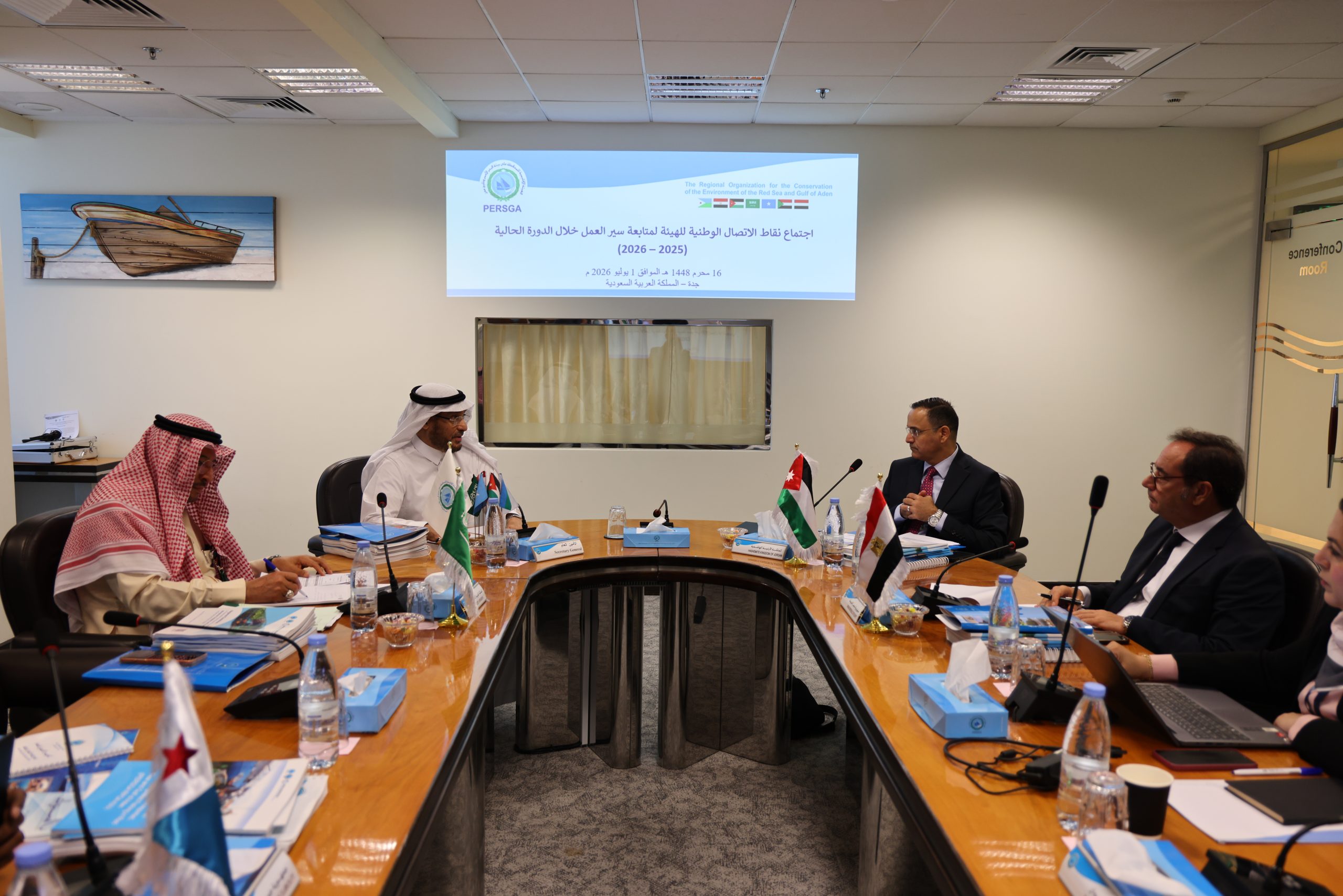
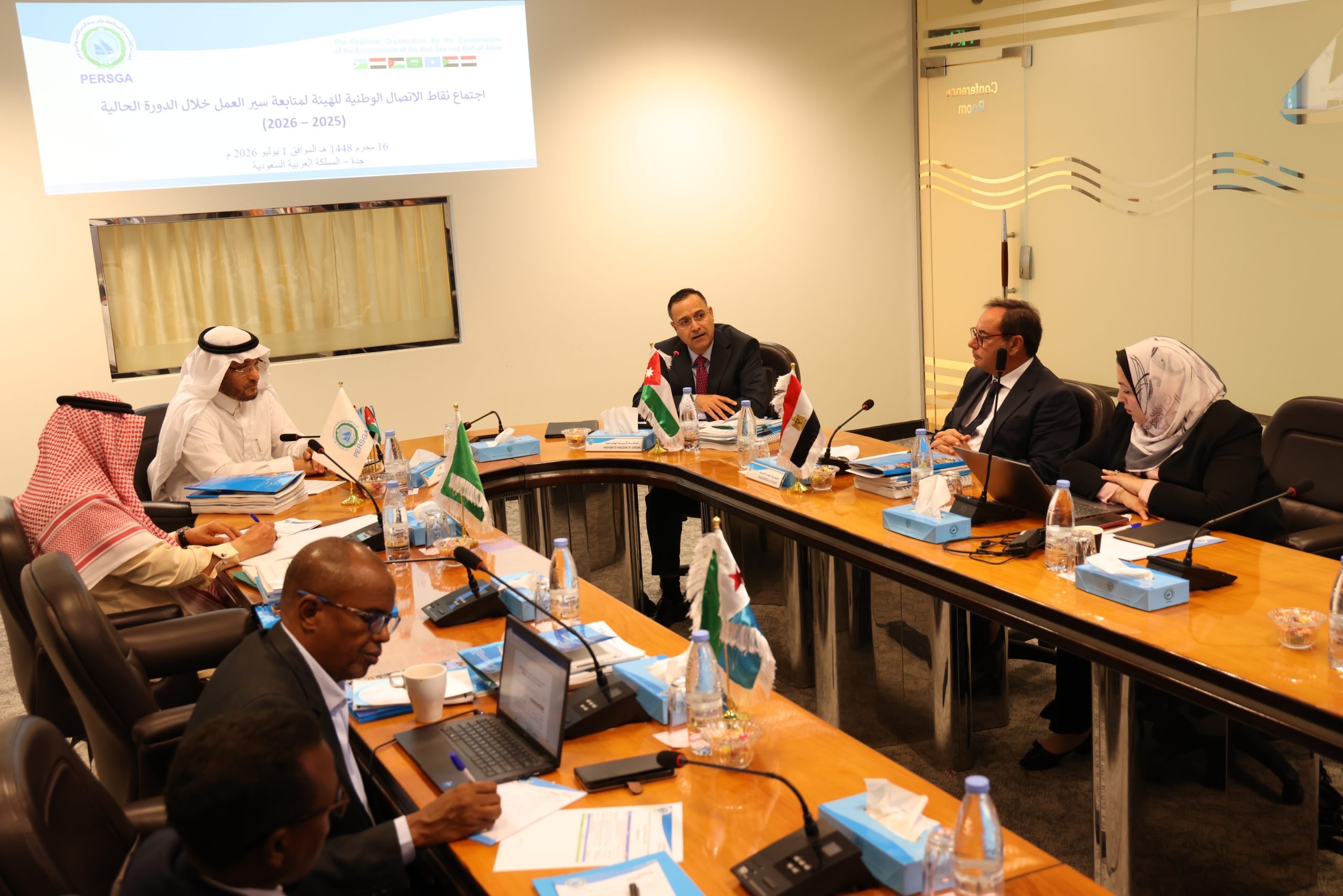
The Regional Organization for the Conservation of the Environment of the Red Sea and Gulf of Aden (PERSGA) held its National Focal Points meeting to review progress achieved during the current cycle (2025-2026) on Wednesday, 1 July 2026, at the organization’s headquarters in Jeddah, Kingdom of Saudi Arabia. The meeting was chaired by Dr. Nedal Alouran, Commissioner for Environment at the Aqaba Special Economic Zone Authority and National Focal Point for the Hashemite Kingdom of Jordan.
In his opening address, the Secretary General welcomed the focal points, including five representatives attending for the first time, stressing that protecting the shared marine space requires the combined efforts of all member states, and that PERSGA works with them as one cohesive family bound by a firm regional partnership. He reviewed key milestones in the organization’s journey since the Jeddah Convention of 1982 and the Cairo Declaration of 1995, commending the continued support of the Kingdom of Saudi Arabia as host country, the Arab Republic of Egypt as host of the Regional Marine Emergency Mutual Aid Centre (EMARSGA), and all member states.
He noted that PERSGA is, for the first time, implementing two projects simultaneously: the SFISH project supported by the World Bank, and the HESBERSGA project supported by the United Nations Environment Programme. He also highlighted the designation of the Red Sea and Gulf of Aden as Special Areas under Annexes I and V of the MARPOL Convention; the five regional cooperation protocols now in force; the delivery of twenty to thirty training workshops each year as a platform for regional cooperation among member states’ experts; and the updating of National Spill Contingency Plans with annexes on Hazardous and Noxious Substances (HNS).
The meeting featured interventions from the focal points, who affirmed their countries’ continued support for PERSGA and praised its central role as a platform for regional cooperation and the exchange of expertise. PERSGA experts then delivered four presentations covering partnerships, projects and capacity building; environmental awareness, biodiversity and marine protected areas; marine pollution reduction and the EMARSGA Centre; and knowledge management and the Regional Information Management System, RIMS.
Discussions underscored the importance of strengthening regional and international cooperation, building synergy with the Barcelona Convention for the Protection of the Mediterranean (MAP), and supporting the knowledge management platform and RIMS in a manner that safeguards national sovereignty over data, alongside the new regional Blue Economy initiative. The meeting concluded by affirming that PERSGA’s success is a shared responsibility between the organization and its member states, and that sustaining it depends on combined efforts and a deepened regional partnership to protect the sensitive marine environment of the Red Sea and Gulf of Aden.