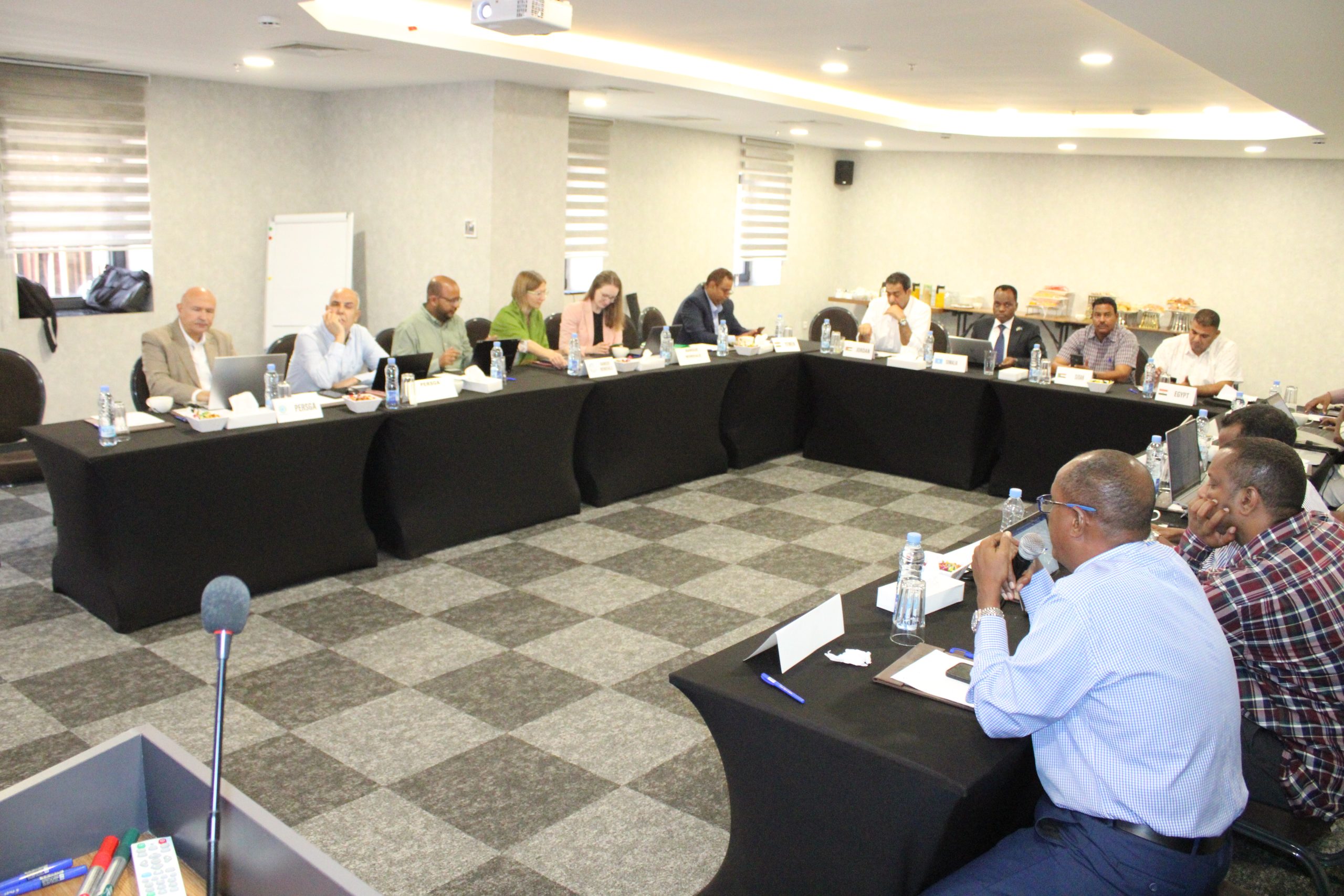
Djibouti City, 13–14 May 2026 — The Regional Organization for the Conservation of the Environment of the Red Sea and Gulf of Aden (PERSGA) convened a two-day regional meeting in Djibouti City to launch preparations for the second phase of the SFISH Project — a World Bank-supported initiative aimed at strengthening the sustainable management of fisheries resources across the Red Sea and Gulf of Aden. The meeting was formally inaugurated by Mr. Dini Abdullah Omar, Secretary General of the Ministry of Environment and Sustainable Development of Djibouti, and was attended by Mr. Aden Ilmi Aden, Adviser to the Minister, reflecting the host country’s strong commitment to the programme.
Meeting Context
The meeting brought together representatives of PERSGA member states — Saudi Arabia, Egypt, Jordan, Sudan, Yemen, and Djibouti as the host country — alongside PERSGA’s technical team and a delegation from the World Bank. It served as both a strategic planning forum for SFISH Phase II and a review session on environmental and social safeguard implementation under the ongoing project.
In his opening address, Mr. Dini Abdullah Omar stressed the importance of unified regional action in addressing the growing environmental pressures facing the Red Sea and Gulf of Aden. He noted that while these waters are among the world’s most ecologically significant marine environments, they face increasing threats from overfishing, unsustainable fishing practices, climate change, and marine pollution — challenges that can only be effectively addressed through collective effort.
Building on SFISH Phase I Achievements
The meeting opened with a review of Phase I accomplishments, which established a strong foundation for regional fisheries governance. Mr. Dini Abdullah Omar highlighted that Phase I made tangible contributions across member states, including:
- Strengthened governance frameworks for the fisheries sector;
- Enhanced institutional capacities of coastal states bordering the Red Sea and Gulf of Aden;
- Establishment of a fully operational Project Coordination Unit (PCU) with specialists covering environmental monitoring, stakeholder engagement, community health, and labor management;
- Improved scientific data collection and management, supported by PERSGA’s Regional Information Management System (RIMS);
- Preparing regional plans about reduction of illegal, unreported, and unregulated fishing (IUU)
- Strengthen the regional capacity to respond to marine pollution
Priorities Identified for SFISH Phase II
Over the two days, participants discussed the priorities and design principles for the next phase of the programme. Key areas identified include:
- Advancing sustainable fisheries management and combating illegal, unreported, and unregulated (IUU) fishing across the region;
- Deepening environmental and social safeguard compliance, with more concrete and evidence-based documentation;
- Strengthening stakeholder consultation with gender-disaggregated data, in line with the World Bank’s Environmental and Social Standard 10 (ESS10);
- Improving grievance mechanisms and ensuring transparent documentation of their operation;
- Transitioning reporting practices from general activity descriptions to environmental and social monitoring data with measurable outcomes.
PERSGA’s Role and Data Assets
As the implementing organization and regional knowledge hub, PERSGA reaffirmed its commitment to coordinating across all member states to ensure harmonised approaches to fisheries data management, stakeholder engagement, and environmental compliance. The Organization confirmed that consultation, environmental, and fisheries data already captured within RIMS will be structured and made available in the formats required for Phase II reporting.
World Bank Partnership and Capacity Support
The World Bank team outlined updated reporting requirements for the new project phase, noting a shift towards environmental and social monitoring reports. The Bank reaffirmed its commitment to supporting PERSGA through the development of tailored reporting templates and a capacity-building training session planned for Jeddah, targeting the PERSGA environmental and social team.
Way Forward
The meeting concluded with an agreed set of action points for both PERSGA and the World Bank ahead of the next reporting milestone in June 2026. These include finalising PAD for phase two, stakeholder consultation data, strengthening grievance documentation, and jointly developing a tailored reporting template for Phase II. A capacity-building workshop in Jeddah is also being planned to further strengthen the PERSGA team’s environmental and social safeguard implementation.