The Regional Organization for the Conservation of the Environment of the Red Sea and Gulf of Aden (PERSGA) successfully concluded a three-day online Training Workshop on Restoration Techniques for Key Marine Habitats—Mangroves, Seagrass Beds, and Coral Reefs—held from 9 to 11 June 2026.
The workshop was organized in collaboration with TRIOX and Polaris Applied Sciences Inc. under the Sustainable Fisheries Development (SFISH) Project in the Red Sea and Gulf of Aden, funded by the World Bank.
The event brought together approximately 35 participants each day from across the region, including scientists, restoration specialists, environmental practitioners, marine resource planners, fisheries experts, and representatives of government agencies and research institutions. Participants also included experts from King Abdullah University of Science and Technology (KAUST) and environmental authorities from PERSGA Member States.
The workshop marked the culmination of a year-long technical effort undertaken through the SFISH Project to identify, assess, and map potential restoration opportunity areas throughout the Red Sea and Gulf of Aden. This work combined local expertise, field assessments, and advanced geospatial analysis to support informed restoration planning and implementation. Technical restoration guidelines were also developed to provide practical support for future restoration initiatives.
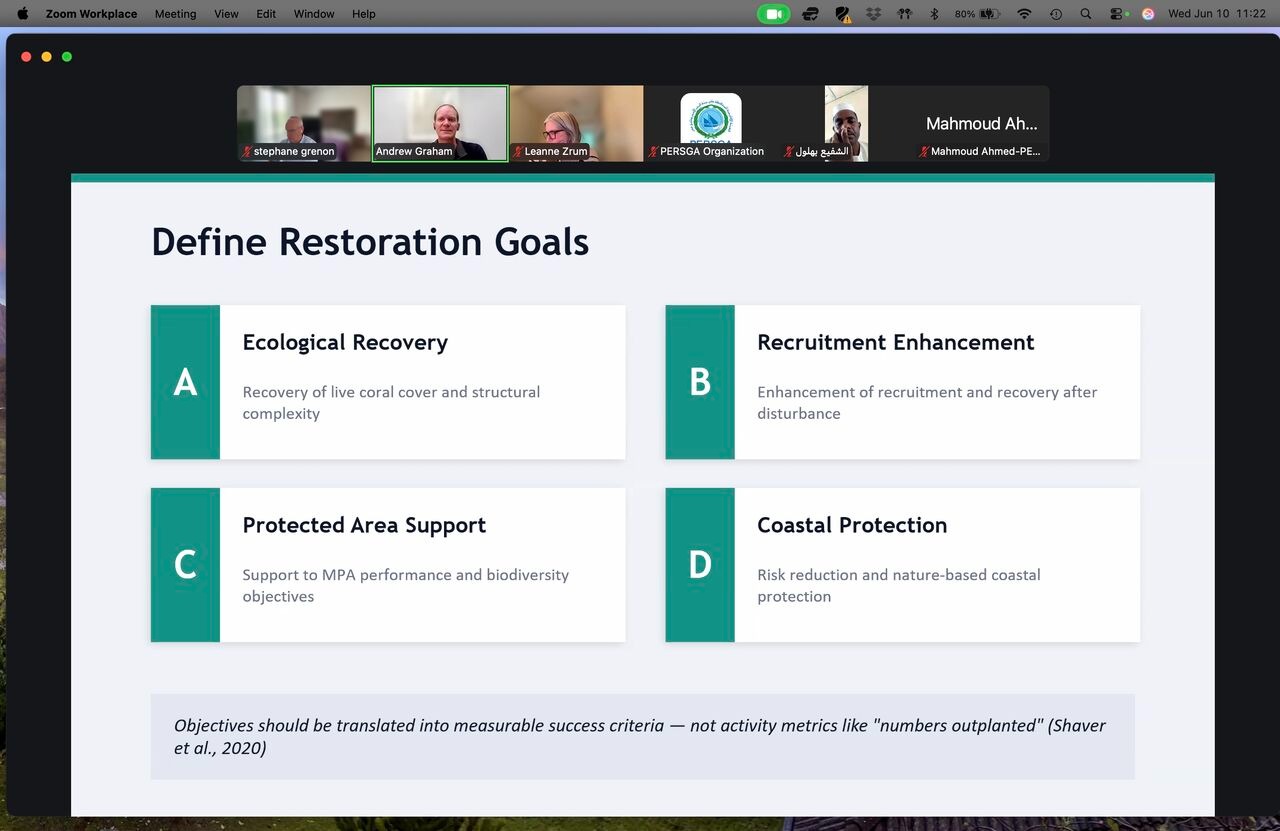
Over the course of the workshop, participants were introduced to restoration concepts, planning frameworks, methodologies, and best practices for coral reefs, mangroves, and seagrass ecosystems. Technical sessions covered:
- Technical guidelines for coral reef restoration, including restoration planning processes, restoration methods, and implementation considerations
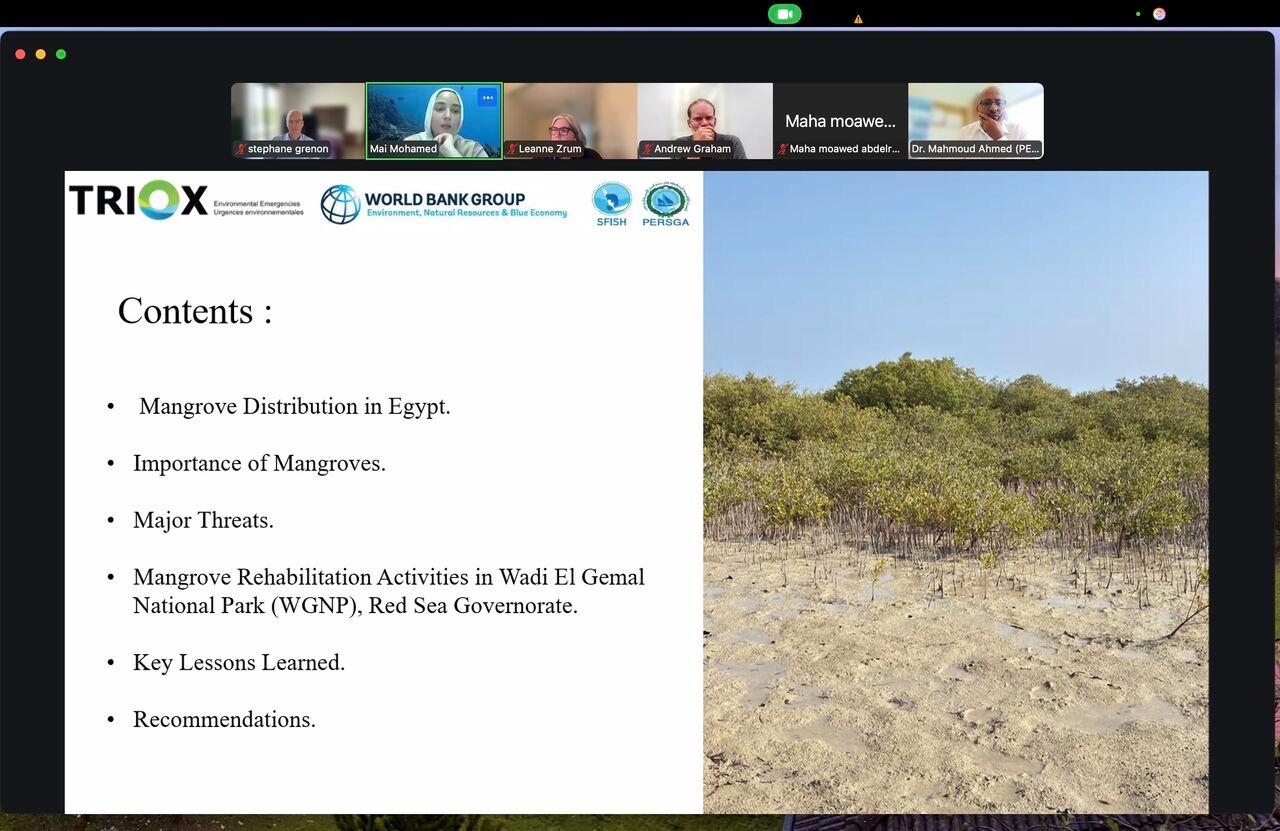
- Technical guidelines for mangrove and seagrass restoration, covering ecological principles, site selection criteria, restoration approaches, monitoring requirements, and best practices.
- Regional efforts under the SFISH Project to identify and map restoration opportunity areas across the Red Sea and Gulf of Aden.
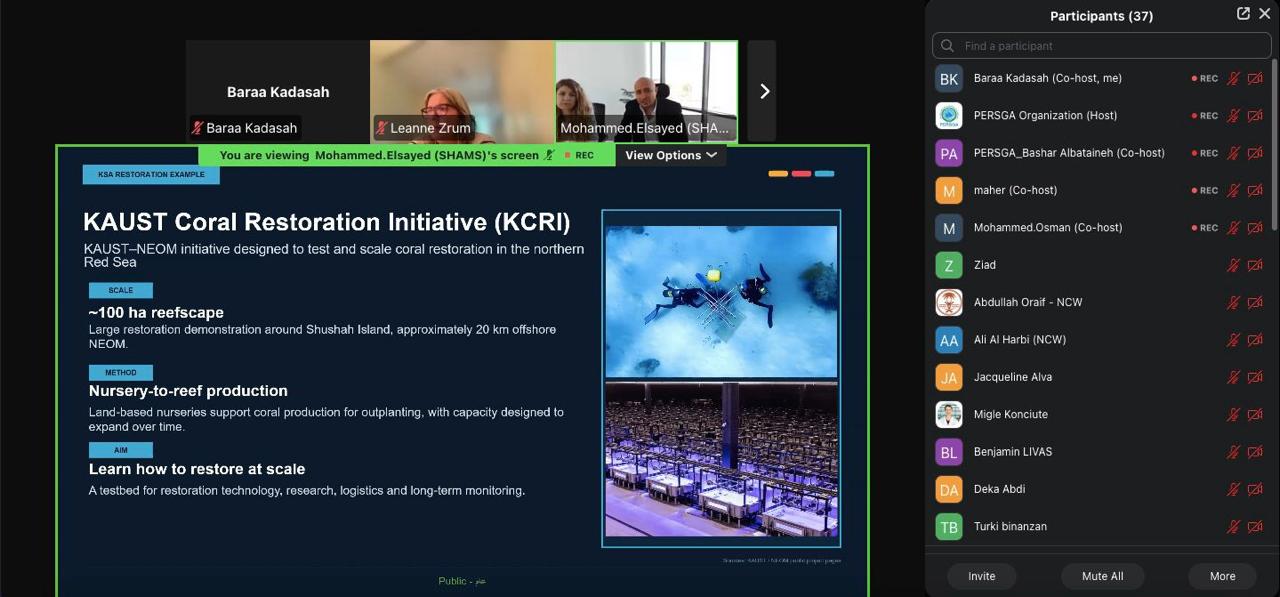
- Practical case studies from Egypt and Saudi Arabia highlighting restoration initiatives, field experiences, challenges, and lessons learned.
Participants highly appreciated the workshop for combining scientific knowledge with practical application and for providing a valuable platform for regional dialogue, knowledge exchange, and networking. They emphasized the importance of continued collaboration among institutions and practitioners to advance ecosystem restoration and support sustainable fisheries and biodiversity conservation across the region.
PERSGA remains committed to strengthening regional capacities and promoting science-based solutions for the protection, restoration, and sustainable management of the marine and coastal ecosystems of the Red Sea and Gulf of Aden.