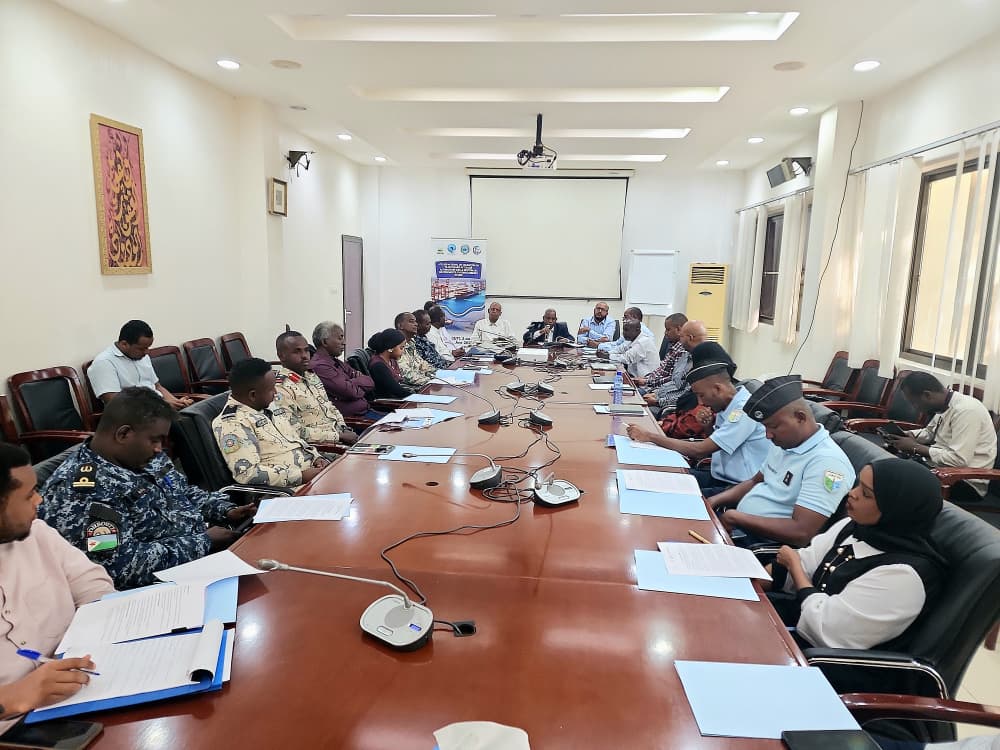
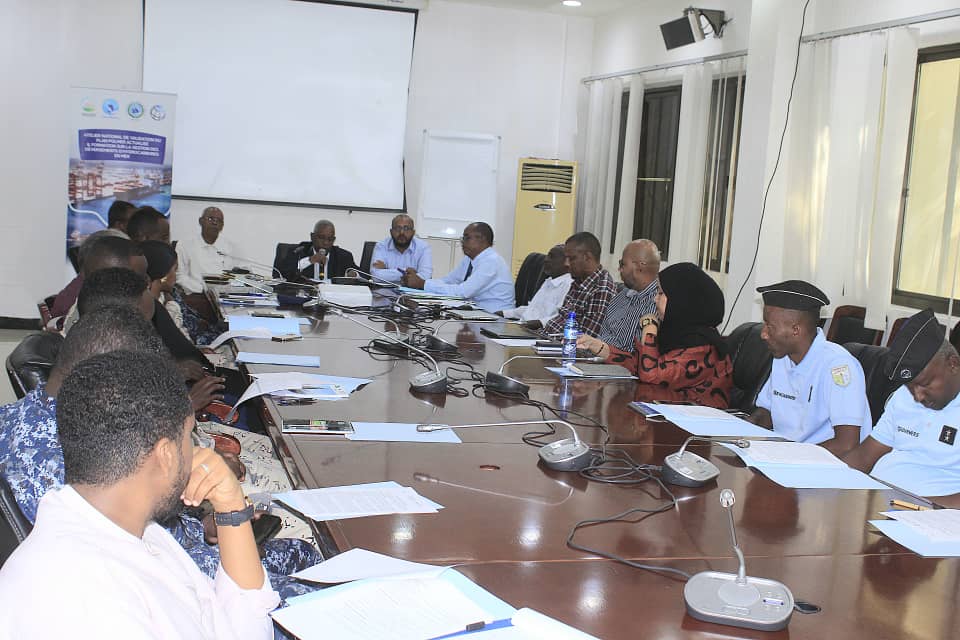
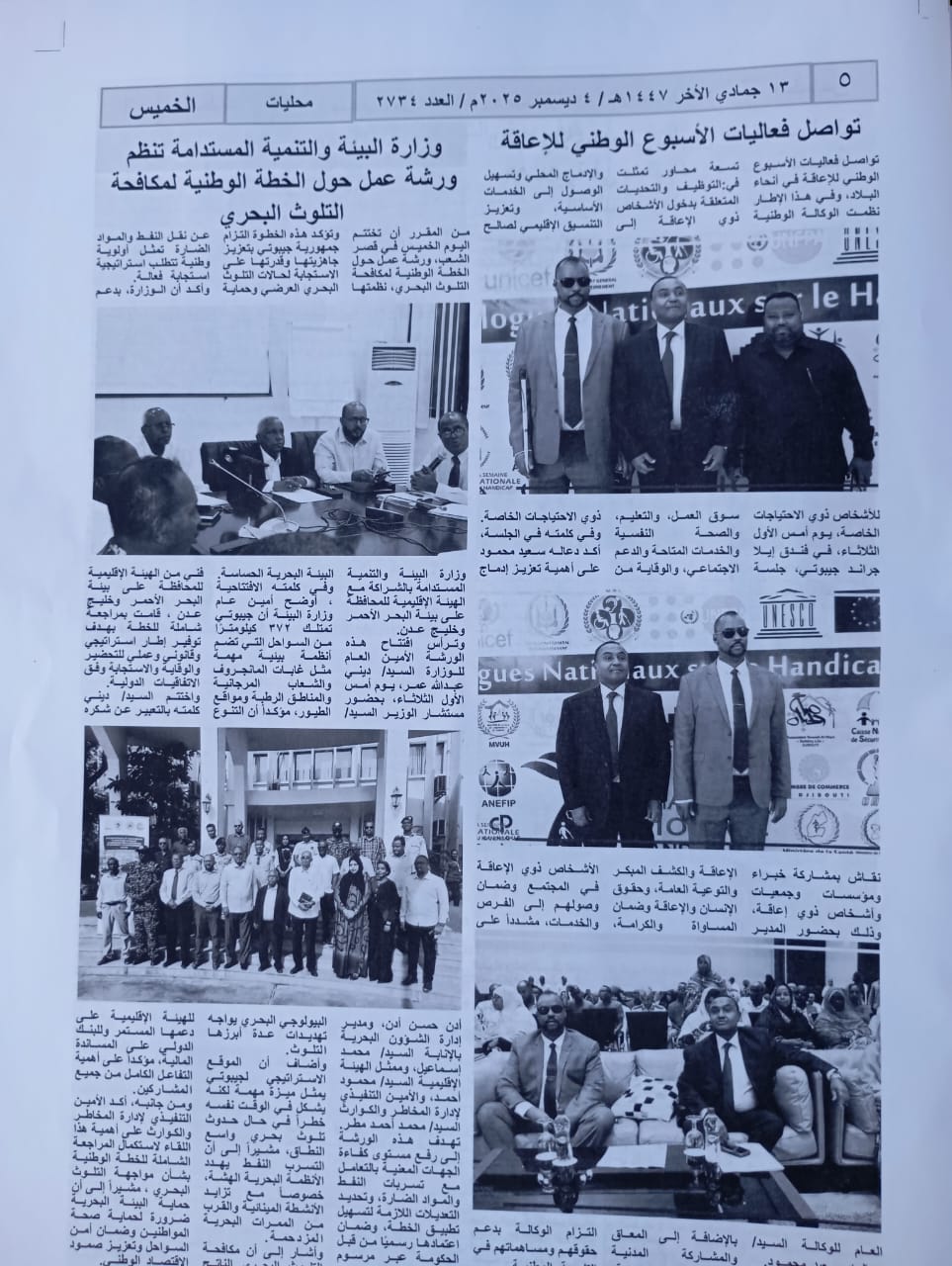
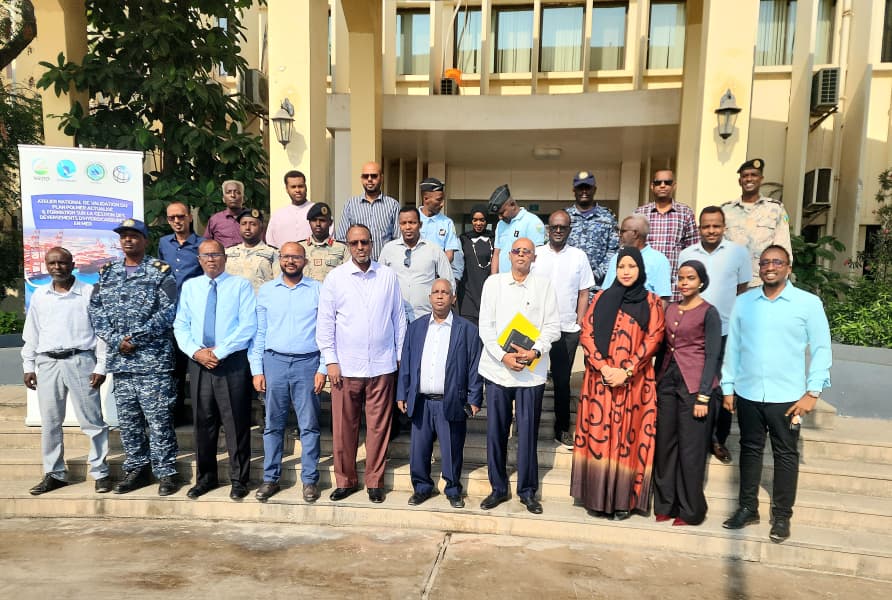
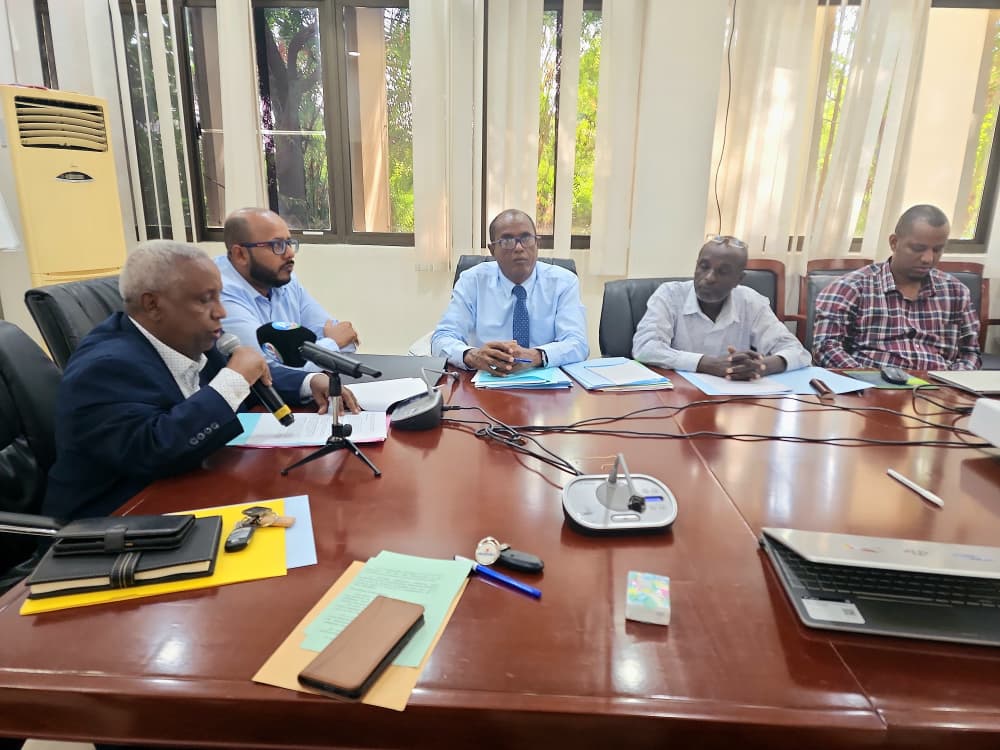
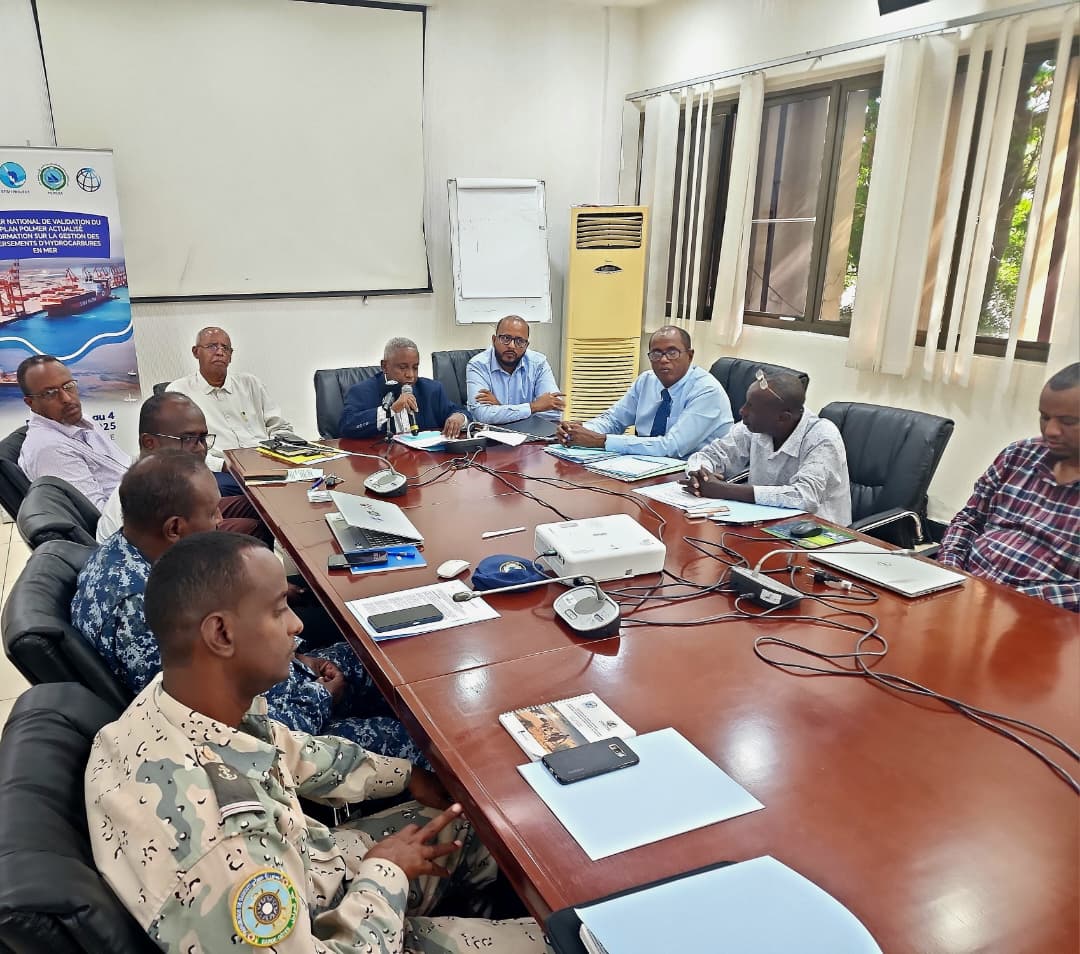
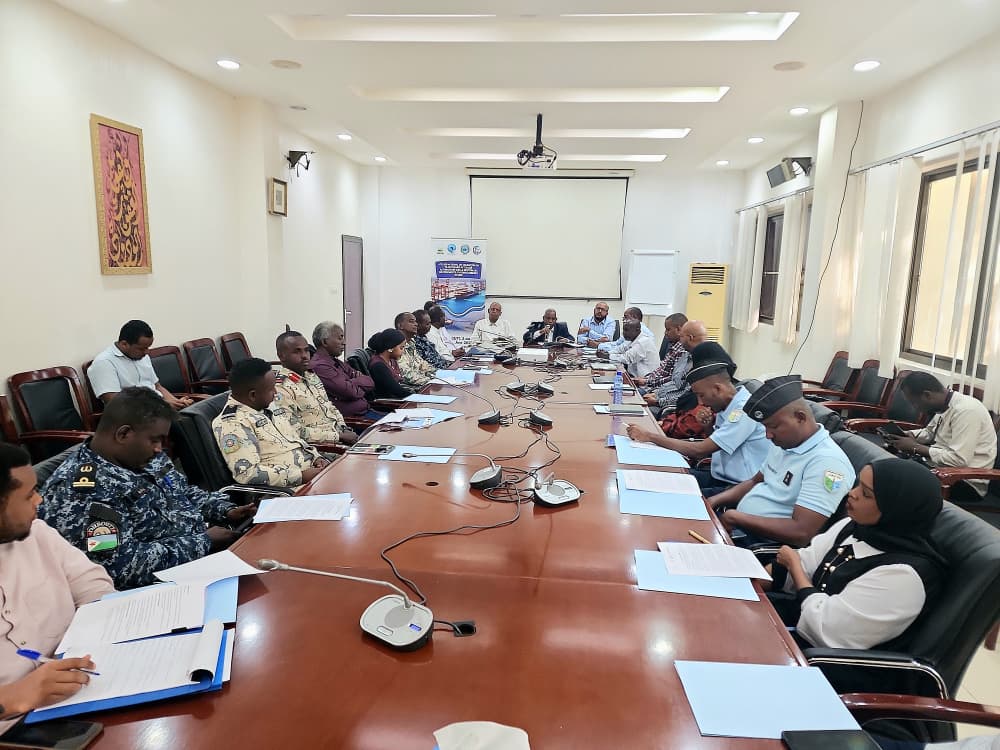
From 02 to 04 December 2025, marine pollution response experts, relevant agencies, and key stakeholders convened at the People’s Palace in Djibouti to review and discuss the revised National Contingency Plan (POLMER) for oil and chemical spills at sea.
The national workshop was organized by PERSGA, in collaboration with the Ministry of Environment and Sustainable Development of Djibouti, within the framework and support of the World Bank funded SFISH Project. Approximately 30 participants attended, representing key national institutions, including the Navy, Coast Guard, Disaster Risk Management, and the Ministries of Transport and Energy, Port and Maritime authorities as well as representatives from the Gendarmerie and municipalities.
The first day focused on an overview of the revised POLMER Plan, with particular emphasis on key issues and recommendations arising from the September 2025 consultation workshop that required further consideration.
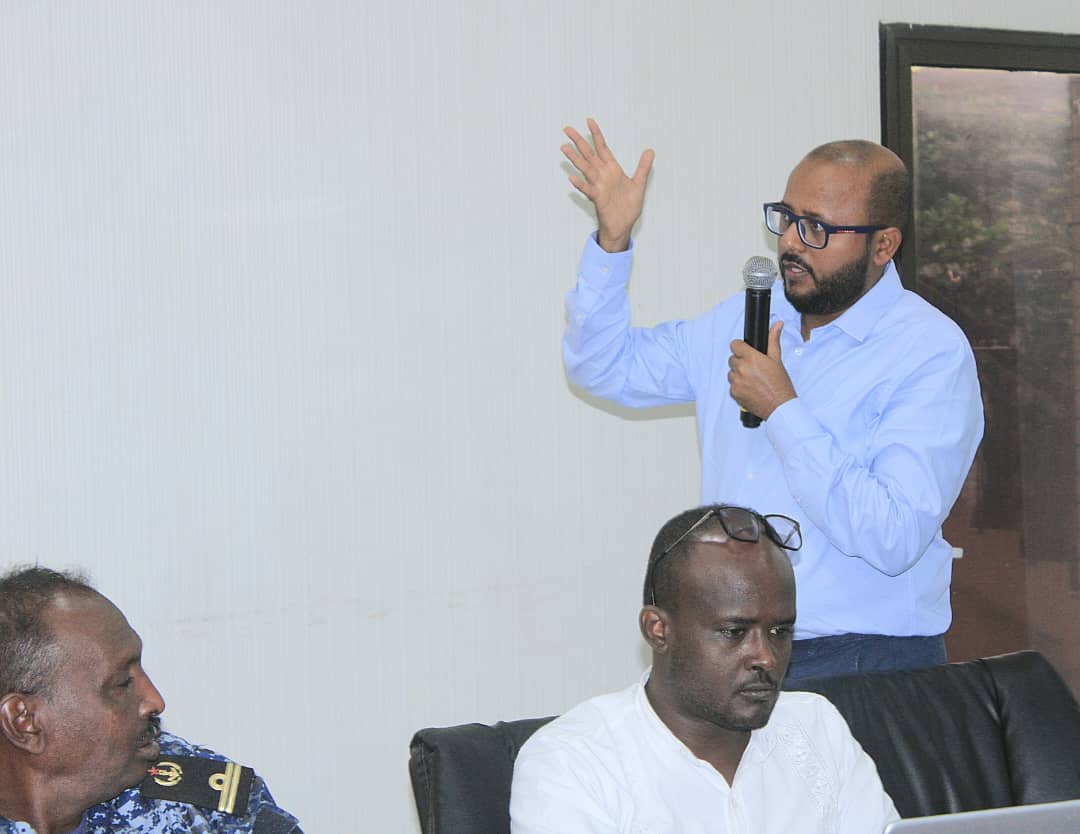
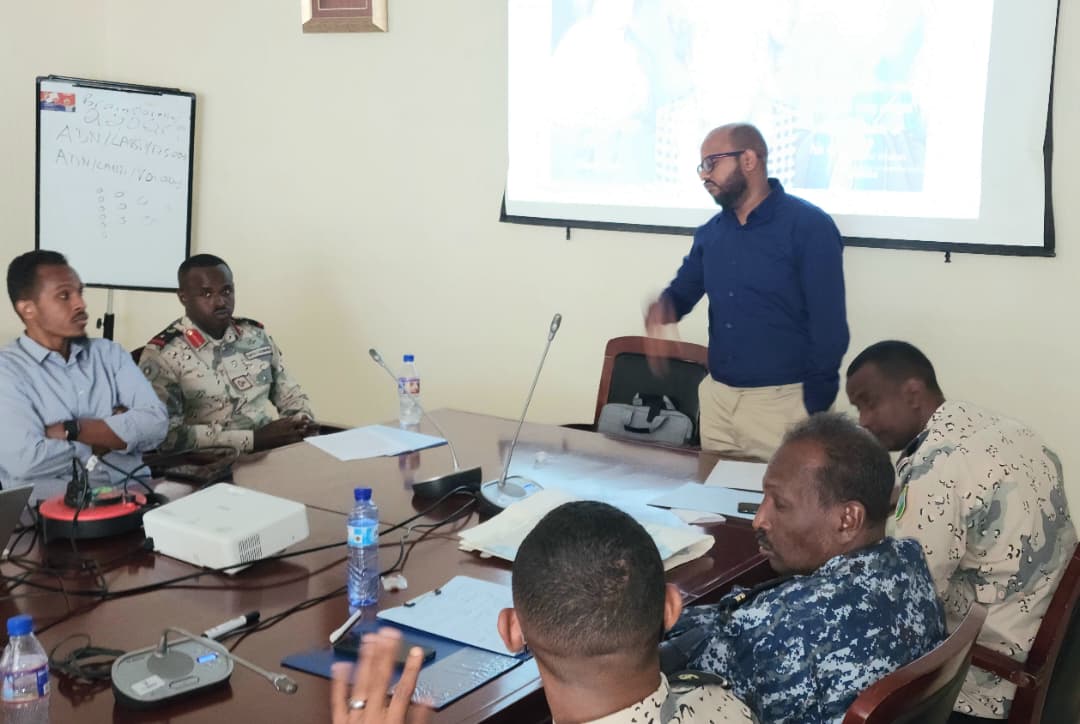
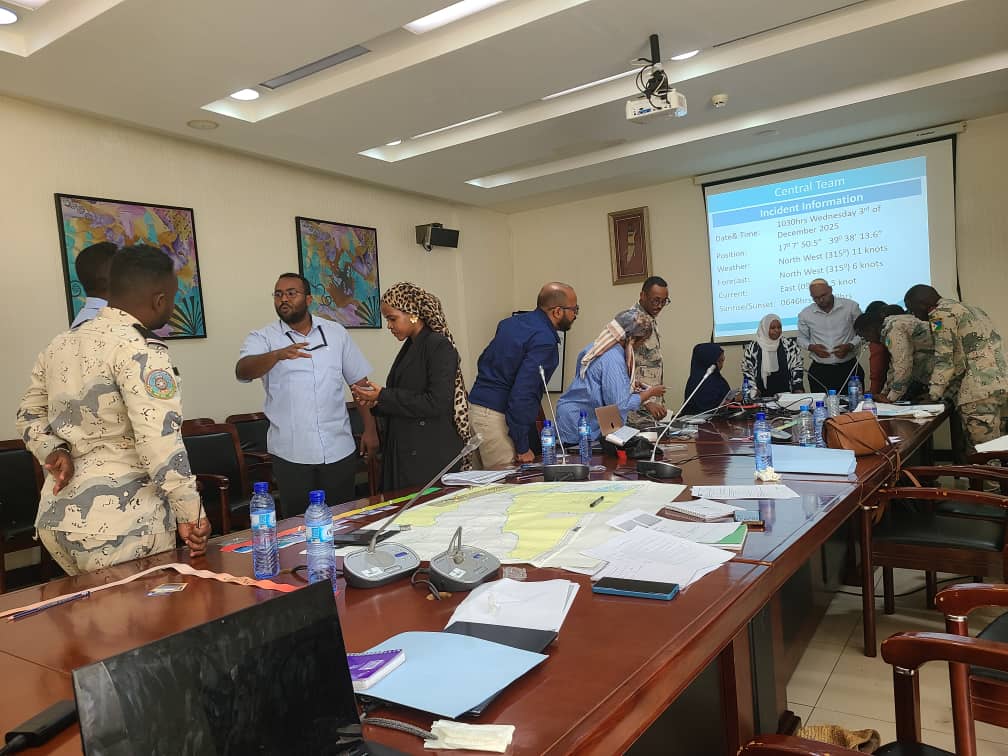
The second day was dedicated to practical training on marine oil and HNS spill response, complemented by a tabletop exercise simulating hypothetical scenarios using fictitious data. This session was designed to test the revised national contingency plan, challenge operational assumptions, and clarify the evolving roles and responsibilities of stakeholders. The exercise aimed to confirm the operational effectiveness of the revised POLMER Plan, which will be enacted through a presidential decree.
The third and final day focused on the final review and validation of the revised contingency plan, consolidating inputs from all stakeholders and aligning the document with relevant international and industry standards, including OPRC, OPRC-HNS, and the guidance of IPIECA/ITOPF. Participants emphasized the importance of updating the sensitivity mapping, strengthening inter-agency coordination, and annexing tactical response sheets for oil and HNS spills to ensure a robust and effective national response system.