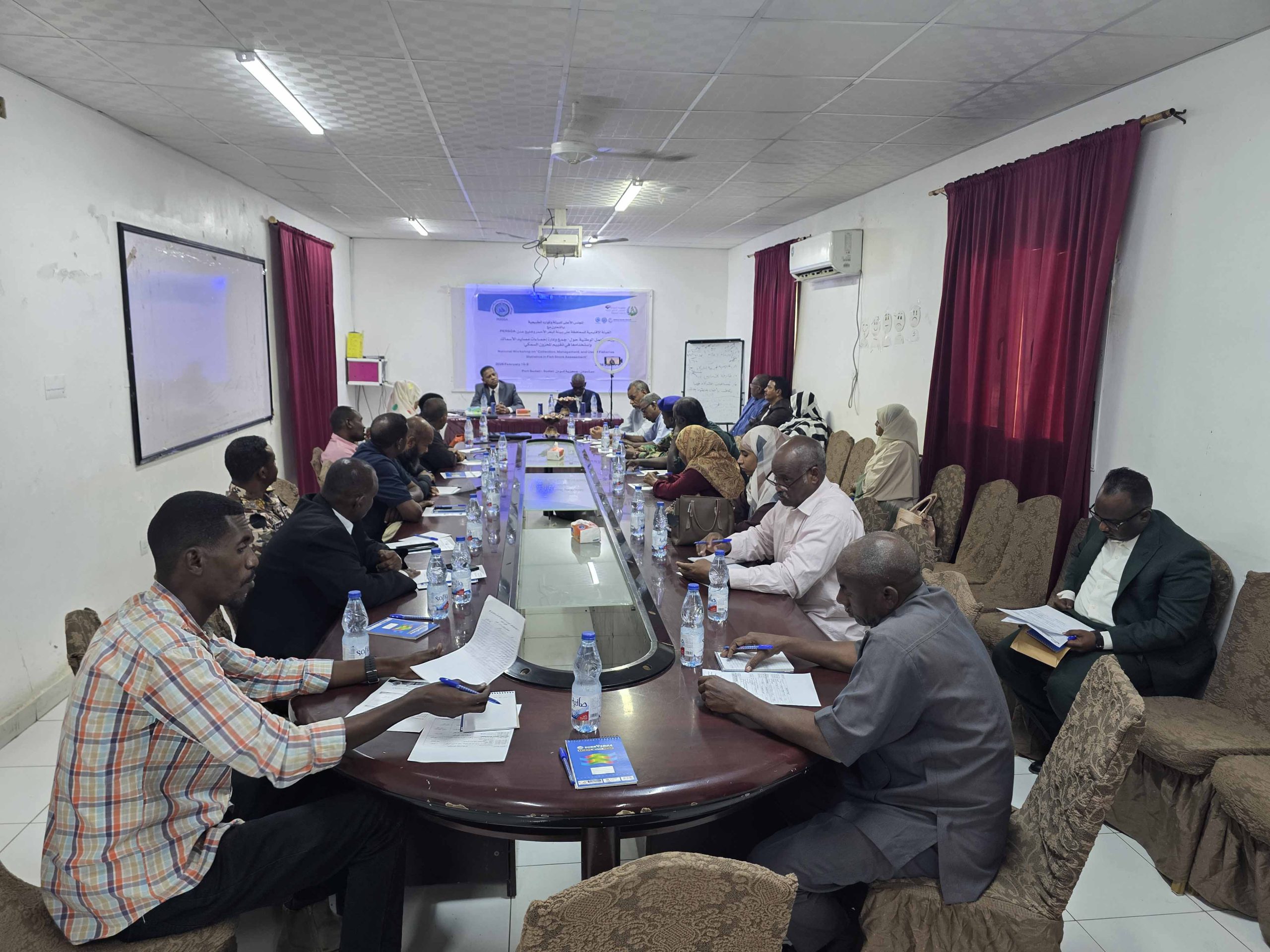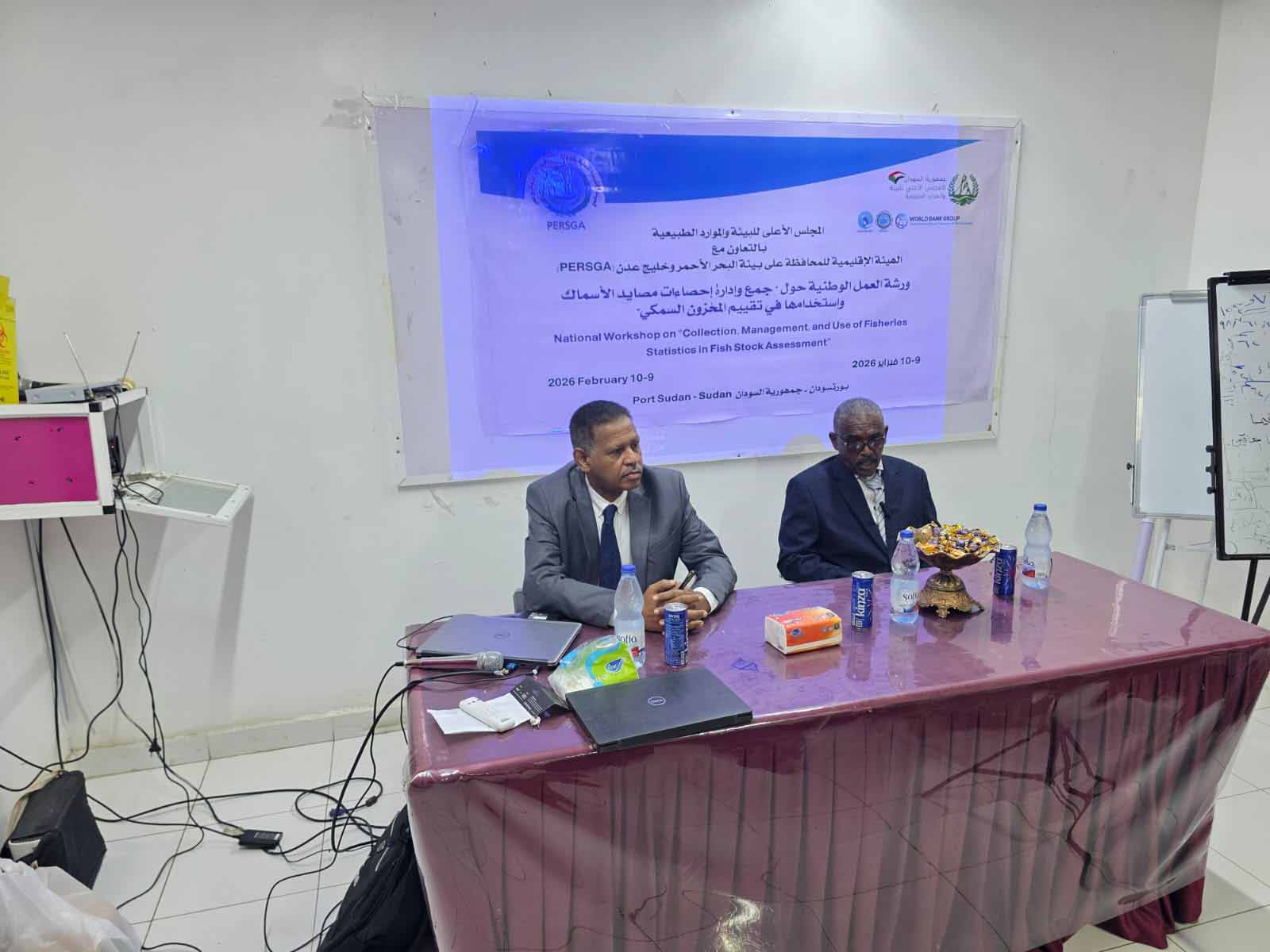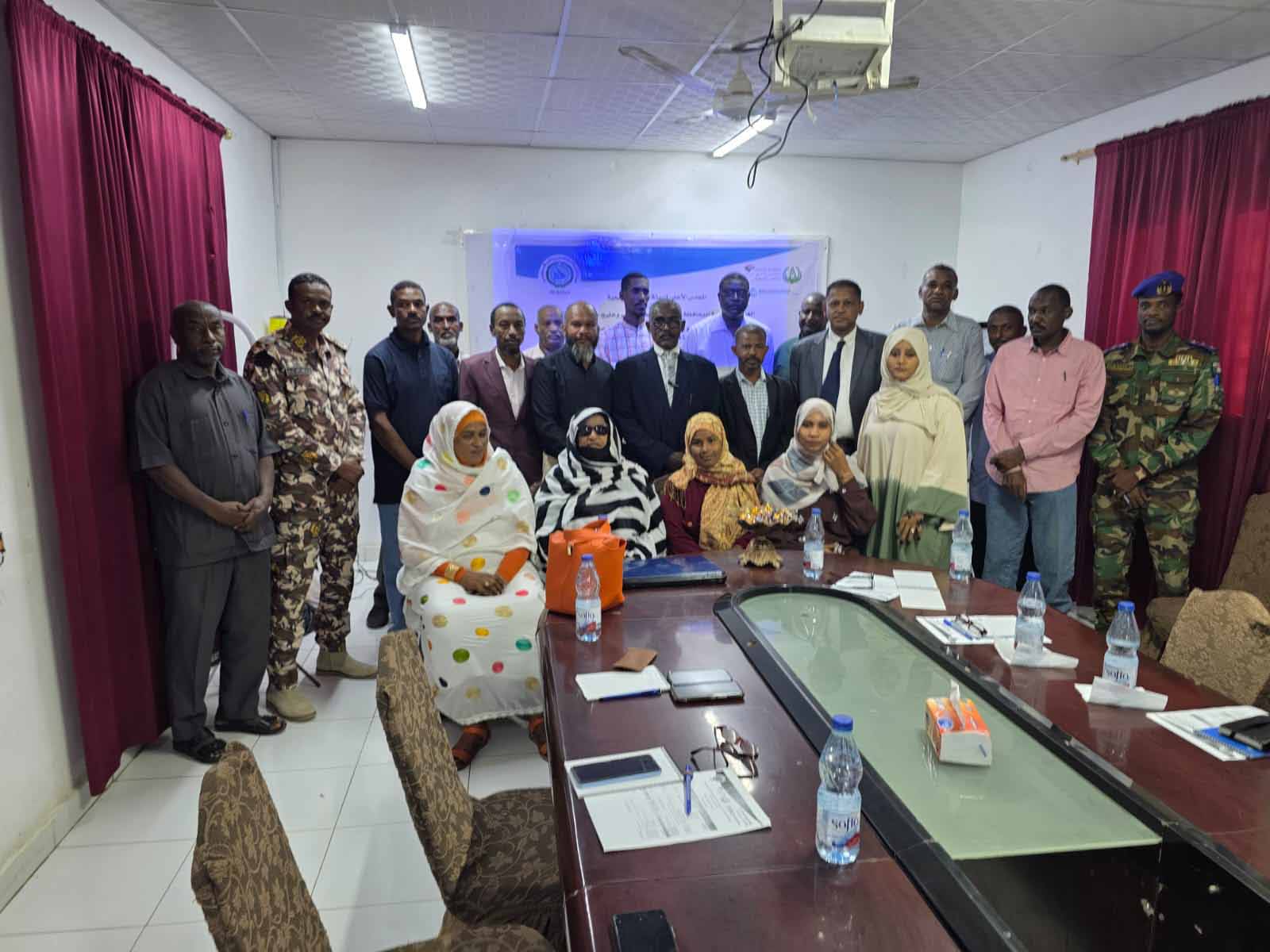
Within the framework of implementing the regional project “Sustainable Fisheries Development in the Red Sea and Gulf of Aden” (SFISH Project), implemented by the Regional Organization in partnership with the World Bank, a national workshop entitled “Collection and Management of Fisheries Statistics and Their Use in Fish Stock Assessment” was held on 09–10 February 2026 in Port Sudan.
The workshop aimed to present the results of studies conducted under the project to assess fish stocks in the Republic of Sudan, strengthen national capacities in fish stock assessment, and enhance participation and exchange of expertise among national fisheries specialists.
The workshop was inaugurated by H.E. Suleiman Al-Boni, Secretary-General of the Higher Council for Environment and Natural Resources, who emphasized in his opening remarks the pivotal importance of fisheries statistics in assessing the status of fish stocks and supporting the sustainable management of marine resources. He noted that fisheries statistics are not merely numbers, but a strategic tool for decision-making and for formulating policies and plans that balance the conservation of marine resources with the promotion of food security and the livelihoods of those working in the fisheries sector. He further stressed the need to develop data collection mechanisms, improve data quality, and strengthen institutional and human capacities in data management, analysis, and effective utilization.
In his remarks, the representative of the Regional Organization (PERSGA) highlighted the importance of protecting the marine environment and outlined the Organization’s role in promoting the sustainability of natural resources in the region through the implementation of regional programs and projects, capacity-building initiatives, and the development of governance frameworks and policies that support sound management. He also underlined that the availability of accurate and reliable fisheries data provides a scientific basis for sound planning and contributes to achieving sustainable fisheries development across member states.
Approximately 23 participants representing various governmental sectors and relevant institutions attended the workshop, including representatives from the Marine Fisheries Administration, the Higher Council for Environment and Tourism, the Higher Council for Environment and Natural Resources, the Fisheries Research Station, Marine Protected Areas, the Coast Guard Unit, Sudan TV, the Marine Research Institute, the University of the Red Sea, the Faculty of Marine Sciences and Fisheries, the Naval Base Intelligence Unit, and the Economic Security authority.
The diversity of participating institutions reflected the importance of the subject matter and the shared commitment to strengthening coordination and integration among stakeholders to support the sustainable management of marine resources.
Over the two days, extensive technical sessions were dedicated to presenting the results of the study conducted by the national consultant, including the methodology applied, data sources, analytical tools used, and key findings related to the status of marine fisheries, patterns of exploitation, and challenges facing the fisheries sector. Interactive discussions were held to gather feedback and recommendations, ensuring that the findings are aligned with practical realities and institutional needs. Among the key recommendations agreed upon in this context is the need to take appropriate and urgent measures to regulate fishing effort for overexploited species, based on the study’s findings, particularly for the groupers Plectropomus pessuliferus and Plectropomus areolatus, and the snapper Lutjanus bohar, which represent commercially important species for Red Sea fisheries in Sudan. The workshop also recommended the continuation of the monitoring program to measure the length frequency of fish in the catch at landing sites, and the expansion of the program to include other important species.
The results of the frame survey of fishing boats conducted along the Sudanese coast were also presented. The survey aimed to enumerate and update data on the fishing fleet, including the number of boats, types, technical specifications, and areas of operation, thereby enabling a more accurate estimation of fishing effort. The presentation highlighted the importance of this survey in addressing information gaps, strengthening the national fisheries database, and providing a solid scientific foundation for stock assessment, fisheries regulation, and the formulation of policies and measures to ensure the rational and sustainable utilization of fishery resources.
At the conclusion of the workshop, participants emphasized the importance of continuing efforts to enhance the fisheries statistics system and improve data collection and analysis mechanisms, recognizing them as the cornerstone of sustainable fisheries management. They also stressed the need to strengthen coordination among relevant institutions and to intensify technical and institutional capacity-building programs to ensure continuous data updating and quality improvement.
The workshop recommended supporting the implementation of regular fishing fleet surveys, updating national databases, and utilizing the results of the study and the frame survey to develop evidence-based plans and policies. These efforts will contribute to the rational use of marine resources, enhance food security, support the livelihoods of fisheries-dependent communities, and promote sustainable marine development for present and future generations.